CruzLink

From imported cells to finished batteries: one supply chain on CruzLink

The problem CruzLink solves

Trade Wind Cells imports battery cells and components, assembles solar-storage batteries on St. Croix, and sells them to the U.S. mainland and other Caribbean islands. Every inbound container passes through five hands: the company, the ocean carrier, the port, a customs review, and the broker who settles the bill, while the island tax office needs its own filing. Today each keeps its own records, so the same facts are entered again at every desk and no one sees the whole supply chain.

CruzLink gives them one shared record. Each role adds its own step from a phone. Custody events cannot be edited after the fact. When the goods are received, the record shows that payment is eligible. The four steps below follow one batch of cells in and one batch of finished batteries out.

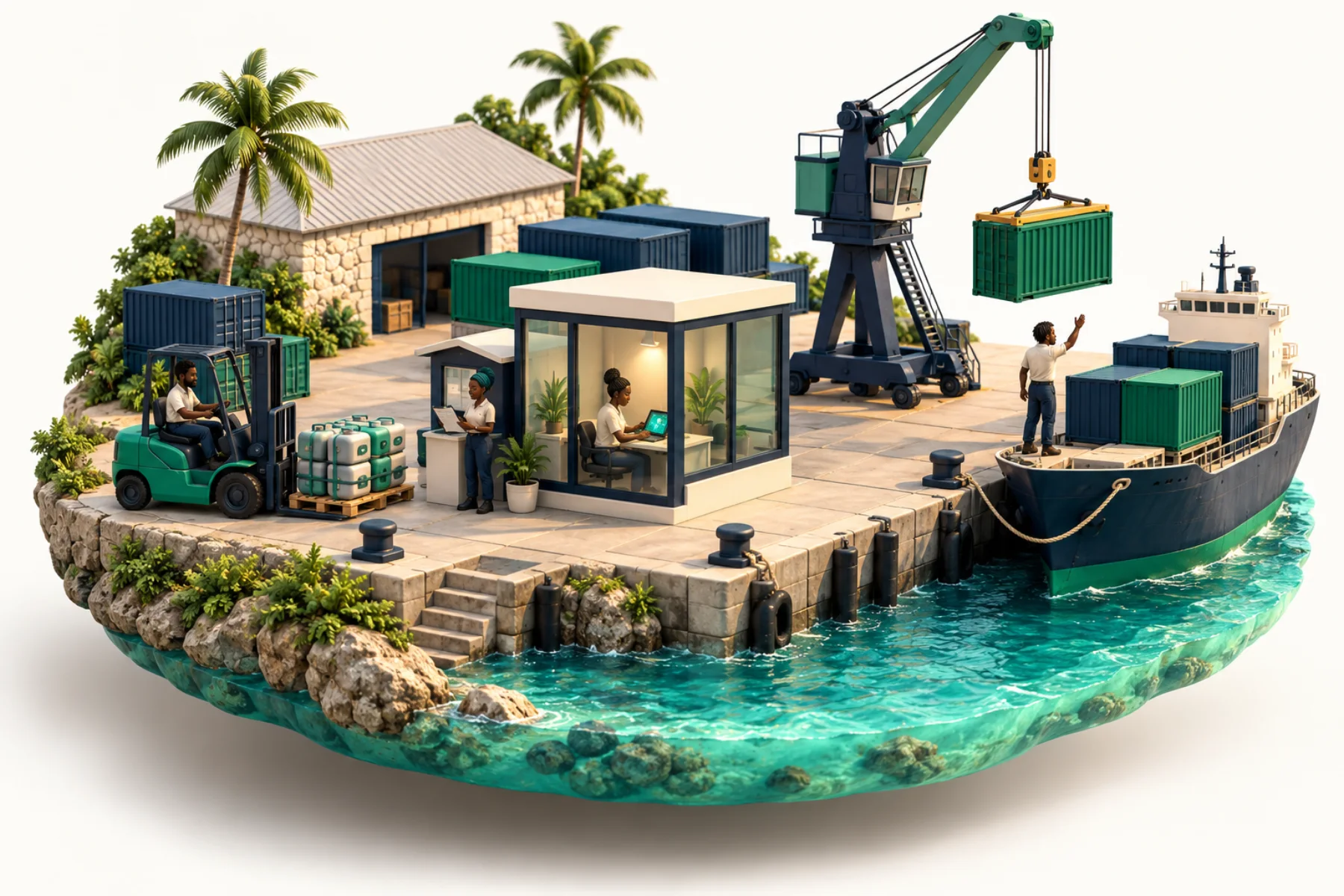
Clay model of a small container quay: a ship alongside, a crane lifting a container, a glass review booth with a glowing tablet, a forklift and a pallet of battery packs.
Clay model of a hillside workshop above a bay: an office with a glowing screen, an open assembly hall with a short conveyor, a flatbed truck at the dock and a thin fiber line on poles from the road.
Clay model of an open office with the roof removed: six desks in an arc, each person at a glowing tablet or laptop, a wall screen with a simple curved route line, a window onto palms and sea.
Clay model of the quay at golden hour: a container ship pulling away with a wake, two shrink-wrapped pallets of battery packs beside a flatbed truck, a clerk with a clipboard, a small island freighter at a side pier.
Step 1

Cells and components arrive

The problem: imported cells reach the island before their paperwork does, and a missing document holds the container at the dock. The fix: the company files the invoice, packing list, bill of lading and declared values on CruzLink before the ship leaves Florida. The carrier and the port see the same record, and a customs review step, shown here as Simulated, sees the packet with a landed-cost estimate and clears or holds it.

The Virgin Islands are outside the U.S. customs territory, so the inbound shipment needs an export filing at the mainland end and an electronic manifest before arrival. Foreign-made cells pay a territorial customs duty on arrival; U.S.-made parts enter free. Lithium cells are Class 9 dangerous goods: the carrier loads them only as a tested type, with the lithium battery mark and a signed shipping paper. Customs reviews the documents electronically and inspects only on risk. The Port Authority's Dock Master berths the ship.

Step 2

Custody and assembly on the island

The problem: once the cells leave the port, no one can prove who had them, where, or when, and the island's excise return is typed up again from the same facts. The fix: the pickup at the gate, the handoff, and the receipt at the factory are recorded on phones with location, time and a photo, each entry locked to the one before it. The receipt marks the shipment received, and the record shows that payment is eligible. The excise return is prepared from the same record, shown here as Simulated.

On the assembly floor the cells become solar-storage battery packs. The excise return is filed online with the island's Bureau of Internal Revenue; a manufacturer's excise on imported inputs is deferred until the finished product is sold, except the container tax.

Step 3

Five roles, one record

The problem: five roles, five systems, five versions of the facts. The fix: one record, where each role touches only its own step: the shipper, the carrier, the port operator, the customs review, and broker and finance. The tax office receives a filing prepared from the same record. The roles and their screens are listed below.

Step 4

Finished batteries go out

The problem: the outbound leg, from the dangerous-goods manifest to the mainland entry, is a second set of paperwork built by hand from the same facts. In the beta, the record carries those facts; the outbound filings themselves are not yet a step the app performs. Phase I proves the inbound corridor; the outbound corridor comes after it.

The finished packs carry the lithium battery mark; the carrier loads them only with a signed shipping paper and keeps a dangerous cargo manifest. Batteries sold to buyers outside the territory carry no excise. The weekly sailing leaves Saturday and reaches Palm Beach on Wednesday, where the broker's entry uses Form 3229 when a pack qualifies to enter the mainland duty free. Batteries bound for other Caribbean islands need their own export filing. Every month the manufacturer files Form 721VI with a cost worksheet, 30 days after month end, even with no sales.

Why St. Croix

Batteries assembled on the island can enter the mainland duty free when they qualify, and the excise on imported cells and parts is deferred until the batteries sell. The island has fiber and weekly sailings. What it did not have was one supply-chain record that every office could trust. CruzLink is that record.

The five roles and their screens

Every person below is invented; the agencies are real. Each frame is a simulated CruzLink screen, not a live record. The customs review is a demonstration role held by GoalSight for the beta; no customs officer uses the app.

  • Marisol Quetel

    Logistics lead, Trade Wind Cells (invented). Shipper.

    Files the shipment with the dangerous-goods shipping paper before the ship sails.

    Pre-arrival packetSimulated
    Documents
    Invoice, packing list, bill of lading, DG shipping paper: attached
    Freight
    Declared
    File shipment
  • Ingrid Petersen

    Hazmat and manifest desk, the ocean carrier's terminal (firm unnamed). Carrier.

    Accepts the cargo against the signed shipping paper and keeps the dangerous cargo manifest.

    Custody eventSimulated
    Event type
    Loaded, dangerous goods
    Location
    Carrier terminal
    Save custody event
  • Clement Hodge

    Dock Master, Virgin Islands Port Authority. Port operator.

    Brings the ship alongside and records the arrival.

    Custody eventSimulated
    Event type
    Berthed
    Location
    Containerport quay
    Save custody event
  • Ana Rivera-Soto

    Officer, U.S. Customs and Border Protection, Port of Christiansted (invented). Customs review step, a demonstration role.

    Shows where a review step belongs: sees the packet and the landed-cost estimate, clears or holds.

    Customs reviewSimulated
    Pre-arrival packet
    Complete
    ACE submission
    Simulated, entry reference SIM-0001
    Approve
  • Theo Samuel

    Excise examiner, Virgin Islands Bureau of Internal Revenue, St. Croix office. Receives a filing; not an app user.

    Receives the excise return prepared from the shipment record, and the monthly manufacturer's return.

    VI excise filingSimulated
    Return
    Import return, manufacturer's deferral
    Status
    Simulated filing
  • Kwame Hendricks

    Driver, a St. Croix drayage company (invented). Carrier.

    Picks up at the gate and hands off at the factory; each custody event is recorded.

    Custody eventSimulated
    Event type
    Picked up
    Location
    Terminal gate
    Photo
    Captured
    Save custody event

Devon Abraham, the production lead, records the factory receipt in step 2. Lisette Moorhead, a licensed customs broker (invented), files the mainland entry in step 4 and acknowledges the payment milestone.

How this page was made

The pictures and camera moves are AI-generated from the same prompts for every step. Every rule stated is a plain form of a sourced line in the project's research appendix; rates and anything the research could not settle are left out. Seehow CruzLink works for the full corridor walk.